Why the Porsche 911?
Why a 911, and why the much-maligned 996?
4 min read
In my post, Origin Story, I wrote about my enthusiasm for sports cars - especially those with enough utility to be a daily driver - and the feeling that cars with a truly analogue, internal combustion character are becoming rarer and more expensive. I wanted to experience one while I still could.
More importantly, I wanted a car that I could share with my wife and daughter. Something that could give us our own set of memories. Weekend trips, car shows, and, if I’m lucky, time together in the garage. Our 2025 BMW X3 is great for lugging around our 80-pound dog and toddler, but it was never going to scratch the sports car itch.
For my sports car, I wanted rear seats - or at least the closest thing a sports car can offer - along with something German after spending so long around Japanese cars. That ruled out the Porsche Cayman, one of my two favorites back in 2017.
It ultimately came down to a BMW M2 or a Porsche 911, as both had generations and models that fit my budget. The M2 made a lot of sense on paper, but if I’m honest, it was always going to be the 911. I wanted to experience 911 ownership for myself.
The 911 had been part of my life long before I could drive. It was the car I always chose in video games, and it showed up in so many of the movies I watched growing up. My father’s friend owned an air-cooled 911 with a massive “tea tray” spoiler on the rear decklid, and I thought it was the coolest thing I had ever seen. Add in that iconic shape and decades of heritage, and no other car came close.
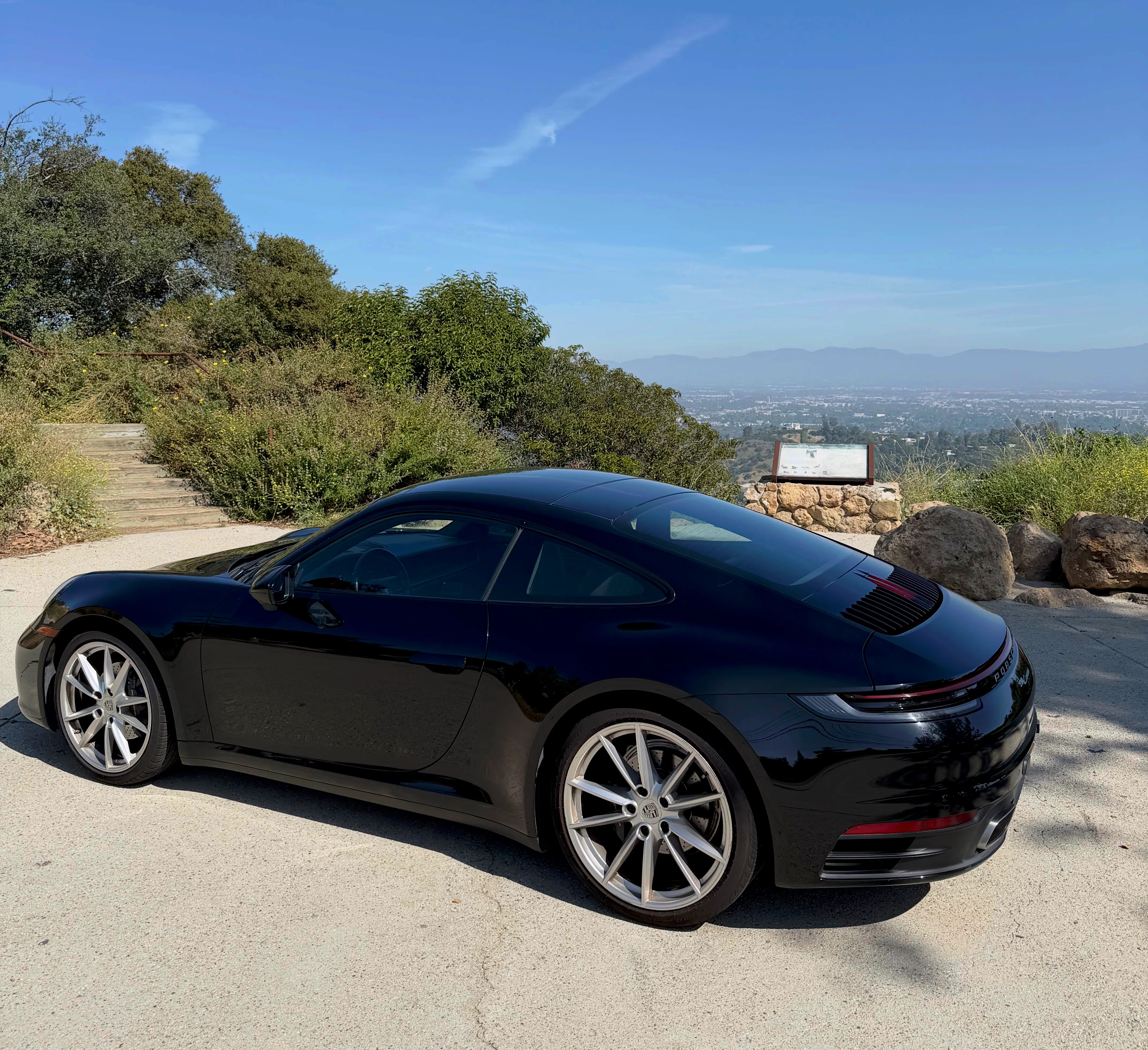
That feeling was solidified in February 2026, when I rented a 992 911 in Los Angeles. I drove it along Mulholland with Daft Punk playing in the background, and then down the PCH to Oceanside to visit a friend. It reconnected me with the excitement I felt about cars when I was a teenager, while offering a completely different experience from the Hondas I grew up with - composed, quick, comfortable, and still unmistakably a sports car. I had an absolute blast. My wife loved it, and my mother-in-law had a great time in it. The 911 brought a big smile to all of our faces.
Why the 996 Generation?
The 992 sealed it, but a new 911 was well beyond my budget. Now it was time to narrow down the generation and model.
Starting with the model - I knew I wanted either a Carrera or a Targa. I absolutely did not want a Cabriolet. It had to have a six-speed manual. Those were non-negotiable.
The Targa was especially appealing. Its rear glass opens like a hatch, which adds a surprising amount of utility and practicality for a 911. And I knew my toddler would love looking up and out through that huge glass roof.
It is also rare. Porsche built only about 5,150 996 Targas out of roughly 175,000 996s - less than 3% of the total. I have always been drawn to unusual, uncommon things, and the Targa is about as uncommon as a 996 gets.
The 996 stood out because it was the generation of 911 that still felt attainable within my budget. There is a case to be made for the 997 as well, but values have moved considerably, and the entire 911 market feels a little wacky right now. I was not buying this car as an investment, but it is hard to ignore the effect of newer models trading above sticker price and older generations selling close to their original MSRP. That pressure has a way of cascading back through the entire range.
For me, the 996 is less about finding a bargain and more about finding the right kind of car. A manual, naturally aspirated 911 that feels connected to the driver. Part of the appeal is the turn-of-the-millennium nostalgia. This was the era I grew up in - analogue gauges, physical buttons for nearly everything, simple plastic interiors, CD players, and dashboards designed before every function migrated to a touchscreen. The 996 has that unmistakable late ’90s and early 2000s feel. It is not luxurious in the modern sense, but it feels honest, purposeful, and familiar - like the kinds of cars I was obsessed with as a kid.
It is a real enthusiast’s car in the sense that it asks something of you. It is not perfect, and it does not need to be. It is a car to learn, maintain, drive, and enjoy.
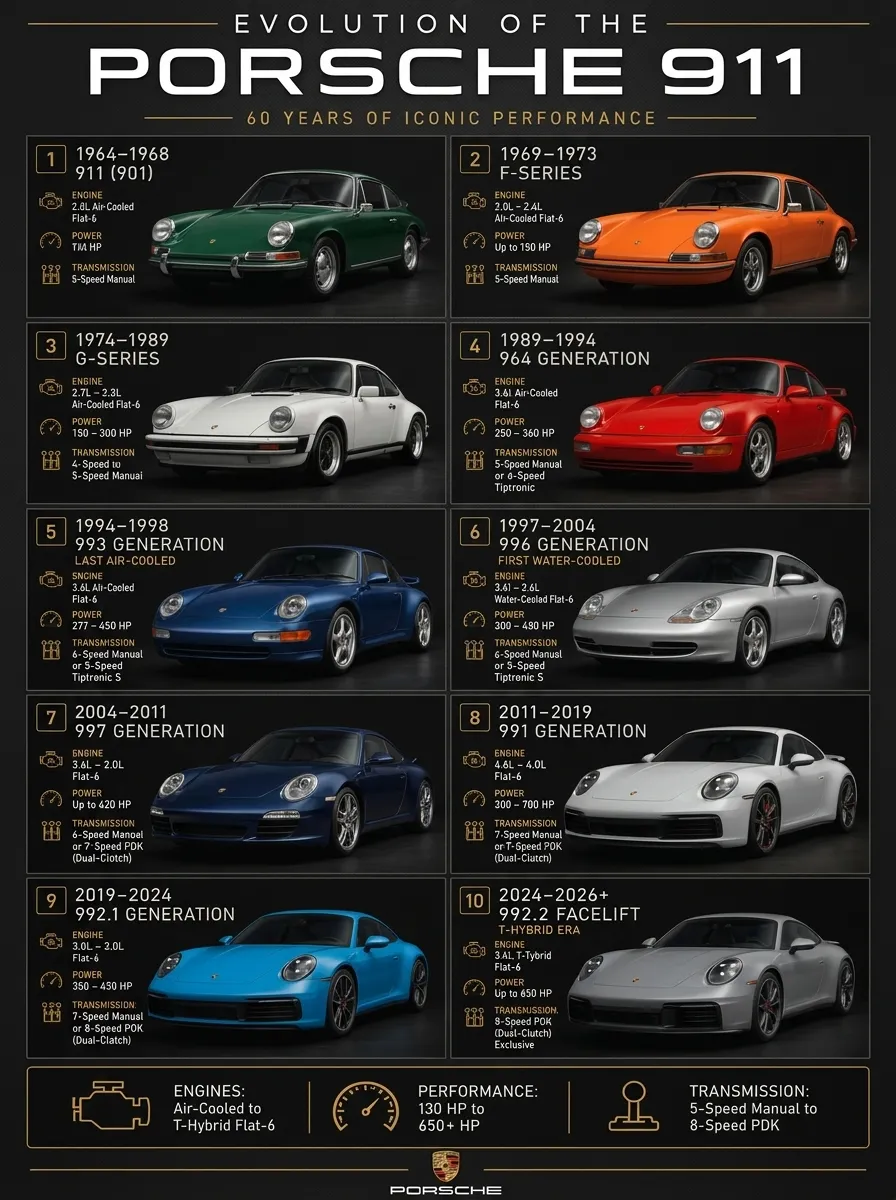
The 996 also matters historically. It was Porsche’s first water-cooled 911, a major departure from the air-cooled cars that came before it. Porsche was navigating a difficult period in the 1990s, and the 996’s shared development and parts strategy with the Boxster helped make the company’s future more sustainable. It was not simply a replacement for the 993; it laid much of the groundwork for the modern 911.
The 996 is split into two phases. The 996.1 (1999-2001) had the 3.4L engine and the original “fried egg” headlights shared with the Boxster. The 996.2 (2002-2004) moved to a larger 3.6L engine with more power, revised headlights, and a handful of interior updates. The Targa was only offered as a 996.2.
It is also the 911 people love to criticize. The headlights, the budget interior, and, most of all, the M96 engine’s reputation for IMS bearing failures and bore scoring. Those risks are real, but they are also well understood now, and they shaped exactly how I approached the hunt.
Lastly, the 996 has always been a little unusual. I like that it was a turning point in Porsche history. I like that it looks different from every other 911 generation. At first, I was not sold on the headlights, but they have really grown on me. They now feel like part of the car’s character - an honest reminder that this was Porsche taking a real risk and moving the 911 forward.
Next up: Buying my Porsche 911